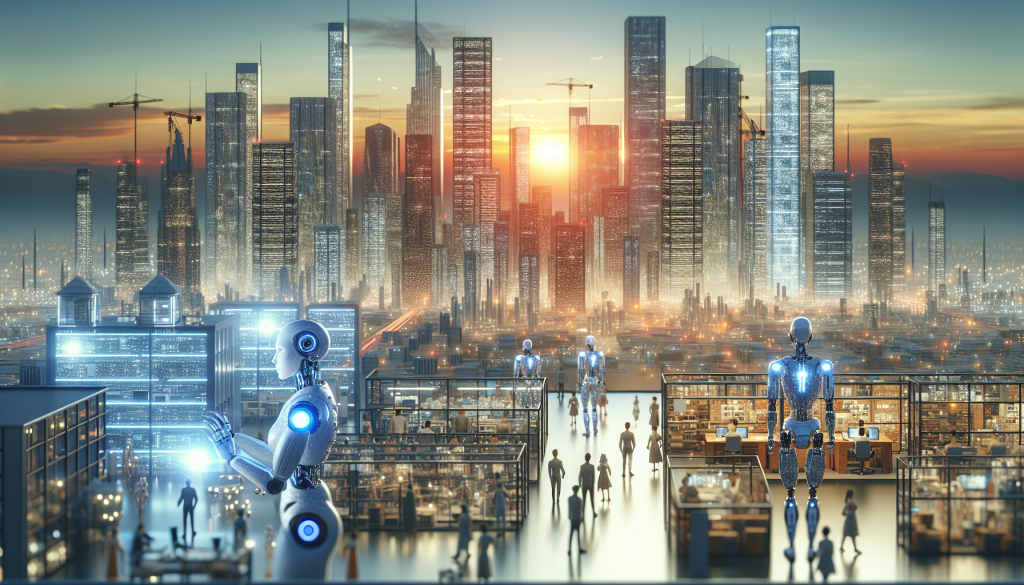
Artificial Intelligence (AI) is no longer a distant dream but a transformative force poised to reshape the global economy and labor market significantly. As technology continues to evolve at a rapid pace, AI’s role in economic and labor dynamics is drawing the attention of governments, businesses, and workers alike. The question on everyone’s mind is: how will AI affect the economy, and what does this mean for the future of work?
AI’s impact on the economy is multifaceted and profound. According to a Goldman Sachs report, AI is projected to boost global GDP by approximately $7 trillion over the next decade. This growth is attributed to AI’s potential to enhance productivity, drive innovation, and create new economic sectors. By automating routine tasks and optimizing complex processes, AI enables businesses to operate more efficiently and at lower costs. This, in turn, increases their competitiveness and allows for reinvestment into further technological advancements and expansion efforts.
One of the most significant ways AI will affect the economy is through its influence on the labor market. AI’s ability to perform tasks traditionally carried out by humans presents both opportunities and challenges. On one hand, AI can take over mundane and repetitive jobs, freeing human resources for more creative and complex roles. On the other hand, this automation threatens certain job categories, necessitating a shift in workforce skills and training.
The impact of AI on jobs varies across different sectors and economies. In advanced economies, it’s estimated that up to 60% of jobs could be affected. Emerging economies might see about 40% of jobs impacted, while low-income economies might experience around a 26% disruption. However, these figures do not imply a direct loss of jobs equating to these percentages. Instead, they suggest a transformation in job roles and the creation of new opportunities that did not exist previously.
As AI continues to permeate the labor market, its influence couldn’t be more evident than in sectors like manufacturing, finance, healthcare, and logistics. In manufacturing, robotics and AI-driven processes streamline production, improve quality control, and augment human capabilities. The finance sector benefits from AI in risk assessment, fraud detection, and personalized customer service. In healthcare, AI aids in diagnostics, personalized medicine, and administrative efficiency, thereby improving patient outcomes.
However, the transition to an AI-driven economy does entail challenges that require strategic policymaking and ethical considerations. As AI could potentially exacerbate income inequality due to the concentration of benefits among those with access to technology and capital, governments need to implement policies that ensure equitable distribution of AI’s advantages. Furthermore, there is an urgent call for continuous education and workforce training programs to equip individuals with the skills necessary to thrive alongside AI.
Intertwined with AI’s transformative potential are concerns about data privacy and cybersecurity, which, if not managed effectively, could pose significant risks to economic stability and individual rights. Ensuring robust data protection measures, transparent AI algorithms, and ethical standards in AI deployment are paramount to fostering public trust and harnessing the full potential of AI.
AI’s transformative potential is not limited to economic expansion and labor market shifts alone; it also plays a crucial role in addressing complex global challenges like climate change, health pandemics, and sustainable urban development. By leveraging AI-driven insights and predictive capabilities, societies can develop more resilient infrastructures and policies that cater to both the current and future needs of diverse populations.
The critical discourse surrounding AI and its economic impact is a blend of optimism, pessimism, and realism. While some anticipate a utopian future where AI unleashes unprecedented economic growth, others warn of potential disruptions and inequalities. A balanced perspective, however, recognizes the transformative power of AI while advocating for responsible and inclusive policies that ensure its benefits are widely distributed.
In conclusion, AI is set to play a pivotal role in reshaping the global economy and labor market. Its potential to boost productivity and foster innovation is matched by the challenges it presents in job displacement and economic inequality. Preparing for this shift requires collective action from governments, businesses, and individuals to create an inclusive and dynamic future where AI’s advantages are maximized for the benefit of all. As we stand on the brink of an AI-driven era, we must navigate this transformation with foresight, equity, and responsibility.